
Until less than a decade ago, gin was barely part of India’s mainstream drinking conversation, much less Indian gin leading conversations across the globe.
The Indian alcobev market was overwhelmingly dominated by whisky, with rum and beer occupying most urban consumption occasions. Gin existed largely as a legacy category; consumed occasionally, but rarely discussed with the same enthusiasm reserved for single malts, craft beer, or premium dark spirits.
The Journey Of Whisky: From Grains To Glass
That has changed dramatically.
Today, India’s gin category is one of the fastest-evolving spaces within premium alco-bev, driven by cocktail culture, premiumisation, experiential drinking, and a younger consumer base increasingly seeking flavour-forward, craft-led spirits. According to market estimates, India’s gin market is projected to cross USD 950 million over the next decade, while several reports place premium and craft gin growth between 7–10% CAGR.
But the real story is not merely about market growth. It is about how Indian gin has evolved from imitation to identity.
From Colonial Spirit to Craft Category
Gin’s relationship with India is historically complicated.
Introduced during colonial rule, gin remained peripheral for decades after Independence, overshadowed by whisky and dark spirits that aligned more naturally with Indian consumption patterns. Until around 2017–18, gin was still considered a niche category in India.
Then came the craft spirits wave.
A new generation of Indian distilleries began approaching gin differently, not as a Western template to replicate, but as a category capable of expressing Indian ingredients, landscapes, and flavour systems. Juniper was still central, but suddenly gin began carrying notes of Himalayan botanicals, Indian citrus, native spices, tea, lemongrass, coriander, and regional herbs.
This coincided with three major shifts happening simultaneously in urban India:
- The rise of cocktail-forward bars and mixology culture
- Growing premium consumption among younger consumers
- increasing willingness to experiment beyond traditional brown spirits
The result was explosive category reinvention.
Today, India has over 30 gin labels operating across premium, craft, and luxury segments.
Premiumisation Is Reshaping the Category
India’s gin boom is not happening in isolation. It sits inside a much larger premiumisation wave reshaping the country’s alcobev industry.
Major spirits companies are increasingly shifting focus toward premium and super-premium portfolios as younger urban consumers prioritise quality, experience, authenticity, and storytelling over simple volume consumption.
The clearest validation of this shift came when Diageo India acquired NAO Spirits, makers of Greater Than and Hapusa Gin, in a deal worth approximately ₹130 crore. The acquisition signalled something the industry had already begun recognising internally: Indian craft gin was no longer experimental. It had become commercially strategic.
At the same time, the category itself has started fragmenting into multiple layers:
- accessible craft gin
- premium Indian gin
- ultra-premium and luxury craft expressions
- terroir-led and botanical-specific gins
According to industry observers, India’s most active premium gin price band currently sits between ₹1,800–₹3,000, while growing movement is now visible in the ₹3,000–₹5,000 luxury segment, as of December 2025
This evolution matters because consumers are no longer buying gin solely as a mixer.
They are increasingly buying into:
- provenance
- production technique
- botanicals
- founder philosophy
- packaging
- experiential identity
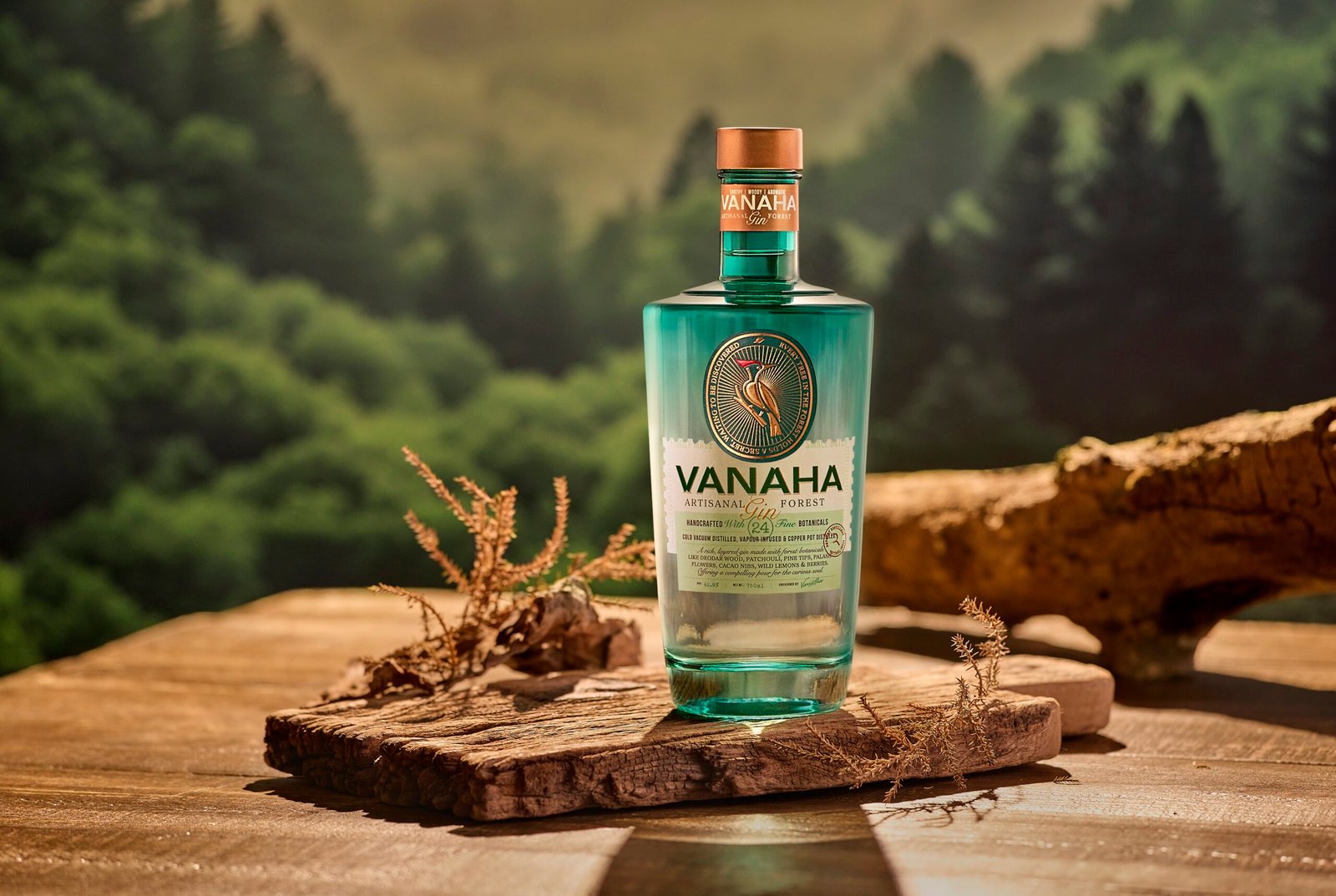
And that is precisely where brands like Vanaha Gin have positioned themselves.
How Vanaha Arrived at the Right Time for Indian Gin
Vanaha Gin enters the market at an interesting point in India’s craft spirits timeline.
The first phase of Indian gin focused heavily on proving the category could exist. The second phase is increasingly about sophistication, differentiation, and global relevance. Rather than positioning itself as a mass-market craft label, Vanaha has built its identity around forest-inspired distillation, layered botanical extraction, and luxury positioning.
According to Vaniitha Jain, Founder and CEO, Revelry Distillery and Vanaha Gin, the intention was never to create a “generic Indian gin.”
Instead, the focus was on creating a spirit that felt immersive and sensory-driven.
“Consumers today are moving beyond simply drinking premium spirits,” she explains. “They want emotional connection, authenticity, and a sense of place in what they consume.”
That thinking is visible across Vanaha’s positioning. The brand leans heavily into forest narratives, artisanal production, texture, aroma layering, and atmospheric storytelling rather than aggressively chasing loud craft branding. It reflects a broader evolution happening within Indian gin itself, where brands are increasingly competing through identity rather than novelty.
Technically, too, Vanaha operates differently from many emerging labels.
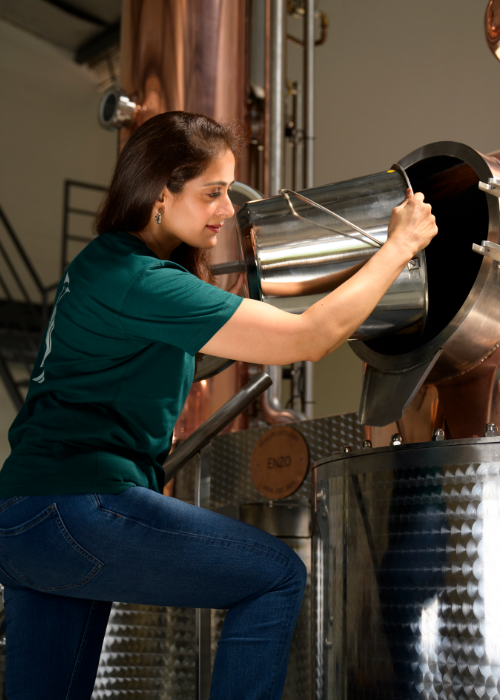
The gin uses a five-step extraction and distillation approach designed to preserve botanical nuance and aromatic structure. This focus on process sophistication is becoming increasingly important as Indian consumers become more category-aware and internationally exposed.
The Cocktail Culture Effect
India’s gin growth cannot be separated from the rise of cocktail culture.
Over the last few years, cocktail-forward bars across cities like Mumbai, Bengaluru, Delhi, and Goa have dramatically reshaped consumer experimentation. Gin became one of the easiest entry points into premium spirits because of its versatility and compatibility with Indian flavours.
Bartenders began building drinks around:
- kokum
- curry leaf
- tamarind
- gondhoraj lime
- Himalayan herbs
- tea infusions
- spice-forward profiles
This flexibility gave Indian gin a unique advantage globally.
Unlike whisky, which is often constrained by category tradition, gin allows near-limitless flavour architecture. That freedom enabled Indian brands to create spirits that felt deeply local while still remaining globally understandable.
As international cocktail culture increasingly embraces regional ingredients and flavour storytelling, Indian gin has suddenly become globally relevant.
Beyond Trend, Toward Global Positioning
The most important shift happening in Indian gin right now is psychological.
For years, Indian alcobev brands largely operated with domestic ambition. Gin is one of the first spirit categories where Indian founders are thinking globally from the beginning. That ambition is changing the category’s language entirely. Today, Indian gin is no longer being discussed merely as an emerging local category. It is increasingly being discussed within the broader global craft spirits movement — alongside conversations around provenance, terroir, luxury, and contemporary distillation.
And while India’s whisky industry still dominates volume and scale, gin has quietly become the category driving some of the country’s most interesting innovation.
Not because it is the biggest category.
But because it is the one redefining perception fastest.