Crafting a spirit that truly reflects its place is a rare art, and few do it with the depth and discipline of Kumaon & I’s co-founders, Ansh Khanna and Samarth Prasad. In this conversation, they breaks down the technical, environmental, and sensory decisions that shape their gin and coffee liqueur — from high-altitude distillation and hyperlocal botanicals to slow-brew extraction and circular sourcing. What emerges is a compelling portrait of Himalayan spirits built not on romance, but on rigorous craft and terroir science.
Why INOXCVA Is The New Name In Premium Kegs
Kumaon & I is positioned as India’s first “provincial dry gin.” From a technical standpoint, what defines a gin as provincial, and how did you approach distillation to ensure the Kumaon terroir expresses itself as more than a marketing narrative?
When we say “provincial,” we mean a gin that’s intrinsically linked to a single geography — its altitude, soil, native botanicals, and people. For Kumaon & I, that meant building a gin where every sensory element has a local fingerprint. The botanicals are either endemic or cultivated within the Himalayan belt, the water source comes from mountain aquifers, and the climate defines the rhythm of production. We didn’t want the word “provincial” to be poetic — we wanted it to be technical. So, our distillation trials were guided by how each local botanical behaved under Kumaon’s temperature and humidity conditions, ensuring the final expression genuinely reflects its origin.
The distillery is set within a preserved Himalayan habitat. What specific environmental parameters, altitude, humidity, temperature differentials, have influenced your fermentation or distillation yields, and how do you adapt your process to these conditions?
The distillery sits at about 6,000 feet above sea level, which changes everything — lower air pressure, slower evaporation, and gentler heat transfer. The cooler climate allows us to distill at a slightly lower temperature, preserving delicate aromatics. Humidity is another factor — our botanical storage and drying are adapted to prevent moisture shifts that can dull intensity. Every distillation day is slightly different, so our process is more intuitive and adaptive than formulaic.
6 Timeless Cocktail And Dessert Pairings Across India
You’ve used Himalayan juniper, Timur, and black turmeric, all botanicals with strong native identity. Could you share your approach to maceration, extraction timing, and balancing volatile compounds to preserve the intensity of these botanicals?
Each botanical demands its own rhythm. The Himalayan juniper is resinous and slow to yield, so we give it an extended maceration. Timur is volatile — its citrus-pepper top notes can easily dissipate — so we treat it with precision and lower distillation pressure. Black turmeric, with its deep earthy oils, adds texture more than aroma. Our approach is layered: we distill some botanicals individually, others in blend, and build the gin like a composition, balancing volatile and non-volatile fractions to achieve both clarity and persistence.
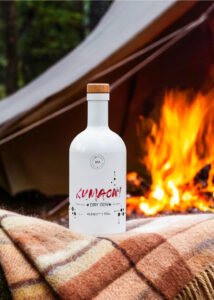
Tell us more about your distillation setup, is it hybrid, pot, or column? And how do you regulate cuts to achieve both clarity and texture in Kumaon & I’s final mouthfeel?
We use a traditional copper pot still with a small rectification column — essentially a hybrid setup that gives us both control and character. The pot still allows the heavier oils to round out the mouthfeel, while the column helps us refine the heads and tails with precision. We don’t rely on fixed temperature cut points; instead, cuts are made by taste and aroma. That’s where human judgment really shapes the spirit — it’s the craft element machines can’t replace.
Many craft distillers today use neutral grain spirits sourced externally. Do you distill your base in-house? If so, what grains or fermentables do you rely on, and how does that decision shape the gin’s character?
Yes, we distill our own base spirit in small batches using locally grown grains. It’s a slower and more expensive route, but it allows us to create a cleaner, more textural foundation. Our base is designed to be slightly softer, which complements the earthy spice of our botanicals instead of overpowering them. The idea was to make a gin that feels like it belongs to the Himalayas, not just flavored by them.
The term “slow-distilled” is often associated with depth and aromatic retention. How slow is “slow” in your context, and how does the duration or distillation pressure affect your final aromatic balance?
“Slow” for us means allowing the still to move at the pace of equilibrium — low heat, low pressure, and time for the vapors to fully interact with the copper. A typical run can stretch up to eight hours. This gentle pace gives us greater aromatic separation and depth. You can literally taste the difference — the gin breathes easier, with more nuance in the citrus and spice layers.
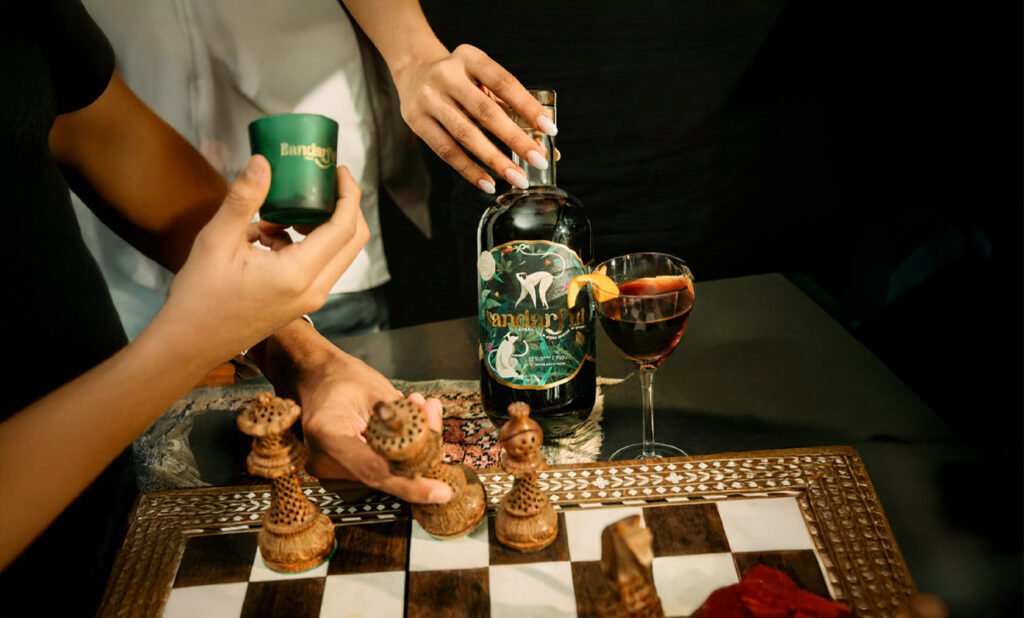
Bandarful’s cold brew coffee base is brewed for 22 hours, a precise duration. How did you determine the optimal brewing time, roast profile, and extraction temperature to achieve both depth and sweetness without bitterness dominating the spirit?
It took over 40 trials to get that right. We experimented with multiple roast levels and found that a medium-dark roast from Coorg and Chikmagalur delivered the best aromatic range. The 22-hour window was chosen because it’s where the brew achieves maximum solubility without crossing into bitter phenolics. The extraction temperature stays below 15°C, which keeps the sweetness intact and the acidity fresh.

You’ve chosen hyperlocal rice as the spirit base for Bandarful. What led you to rice over other grains, and what kind of fermentation profile does it produce in terms of esters and mouthfeel?
Bandarful is built on a clean, neutral spirit base that allows the coffee to take centre stage. We didn’t want the base to interfere with the coffee’s complexity — it’s designed to be a silent partner, carrying the weight and texture of the brew without adding competing grain notes. This neutrality gives us precision in flavour — a canvas where the coffee’s fruit, cocoa, and spice tones can really open up. The result is a liqueur that’s expressive yet beautifully balanced, with natural sweetness coming from the coffee itself rather than the spirit.
Coffee liqueurs often rely heavily on sugar for texture. How do you manage residual sugar levels in Bandarful while maintaining viscosity and shelf stability without masking the complexity of the coffee notes?
That was one of our biggest challenges — finding sweetness that supports rather than dominates. Bandarful is made with estate-sourced Arabica from Chikmagalur, which naturally brings richness, caramel tones, and a touch of fruit sweetness. We use just enough sugar to round the edges, but the texture largely comes from the oils and body of the cold brew itself, which is steeped for 22 hours for depth and balance. The goal was to make a coffee liqueur that feels indulgent yet refined — where you taste the coffee first, not the sugar. Shelf stability comes from natural filtration and controlled resting, not additives or excess sweetness.
Both your spirits emphasize traceability and circular sourcing. Could you share specifics, for instance, how are your botanicals cultivated, dried, and transported to ensure consistency while keeping carbon footprint low?
Most of our botanicals are cultivated by small growers we’ve partnered with in Uttarakhand. They’re shade-dried on site, often using solar dehydration units we’ve helped set up, to reduce energy use. We try to source within a few hundred kilometers of the distillery, which minimizes transport emissions. Even our packaging materials are regionally produced. It’s a slow ecosystem, but that’s how circularity becomes real — not just a label.
Given your backgrounds in winemaking and hospitality, how do you apply sensory analysis, be it through structured tasting matrices or chemical analysis, to fine-tune batch consistency and organoleptic balance?
We lean heavily on sensory structure. Every batch goes through blind triangle tastings and aroma mapping before release. Coming from wine, I value palate memory — it’s the best calibration tool. But we also back it up with basic lab analysis for alcohol and oil content. The goal isn’t just consistency, but emotional coherence — each batch should feel like the same story told with slightly different inflection.
You’ve hinted at developing distillery tourism in Kumaon. Beyond a visitor experience, do you envision this as a platform for knowledge exchange, perhaps a Himalayan spirits lab or a space for experimental distillation?
Absolutely. The idea is to build a space that celebrates Himalayan produce and craftsmanship, not just our brand. We want it to become a creative hub — a place where distillers, botanists, and chefs can collaborate on sensory experiments. Think of it as a living lab for Himalayan spirits, rooted in education and exploration.
India’s gin market is getting increasingly crowded. From a portfolio strategy perspective, how do you plan to scale without losing artisanal integrity or terroir precision?
Growth for us isn’t just volume — it’s depth. We want to scale intelligently, by building supply chains that grow with us and not around us. The terroir focus will stay non-negotiable. Our philosophy is small-batch at scale — keeping the same production integrity, even as we expand footprint. It’s slower, but it’s sustainable.
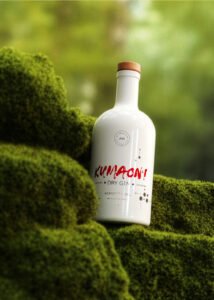
From a design perspective, Kumaon & I’s Aipan-inspired bottle tells a story of circularity. Were the materials, embossing, and glasswork sourced locally? And how do you view design as an extension of brand terroir?
Yes, most of the materials are sourced and crafted locally. The glass is made in India, and the embossing draws directly from traditional Aipan art, interpreted by local artisans. We wanted the design to feel tactile — something that carries the soul of the mountains in both form and texture. For us, design isn’t just packaging; it’s storytelling. The bottle had to feel grounded, like it could only belong to the Himalayas.
Looking ahead, will Himmaleh Spirits remain focused on gin and liqueur, or do you foresee a broader Himalayan spirits ecosystem, perhaps whiskies, apéritifs, or even regional bitters that deepen your terroir narrative?
We’ve already begun expanding our portfolio beyond gin and coffee liqueur. Today, Himmaleh Spirits includes a range that covers gin, white rum, dark rum, and a new vodka we recently launched. Each of these spirits is approached with the same philosophy — rooted in craft, traceability, and a sense of place. The idea has always been to build a Himalayan spirits ecosystem rather than a single-category brand. As we grow, we’ll continue exploring what the region naturally offers — from botanicals to fermentables — and translate that diversity into spirits that feel both authentic and contemporary.
As Ansh Khanna and Samarth Prasad look ahead, their vision stretches far beyond a single gin or liqueur. Himmaleh Spirits is steadily evolving into a larger ecosystem, one that champions regional growers, experimental distillation, and the cultural richness of the Himalayas. The journey is slow by design, rooted in integrity and place. If the future of Himalayan spirits has a direction, it lies in stories like this, precise, purposeful, and grounded in the mountains.