India’s premium whisky space is changing fast, and Uppal Brewers and Distillers is one of the companies quietly shaping that shift from the inside. At the heart of this new-age alco-bev venture is Ankur Sachdeva, CEO and co-founder, a seasoned industry leader who has spent over two decades building and scaling some of the world’s most respected whisky brands.
Indian Craft Beer And The Shift Towards Local Ingredients
After working across global powerhouses like William Grant & Sons, Radico, and ABD, Sachdeva returned to India with a clear conviction: the country was ready for premium whisky stories told in its own voice. With Soorahi and Madhvan, Uppal Brewers and Distillers is not chasing borrowed Scotch narratives. Instead, it is building whiskies rooted in Indian culture, aspiration, and modern taste, designed for a new generation of confident, experience-led drinkers.
From careful blending to thoughtful brand design, every decision reflects a long-term view. The goal is not quick wins, but to create spirits that people come back to, year after year, because they feel authentic, meaningful, and proudly Indian.
How would you describe UBD’s philosophy in simple terms to someone discovering the brand for the first time?
UBD is a premium-only Indian alco-bev company built on one clear belief: quality before scale. We are focused on creating an optimal portfolio of spirits where craftsmanship, authenticity, and long-term value take precedence over volume.
Our approach combines globally traditional whisky-making sensibilities with modern thinking, along with the intent of building brands that endure, not just chase short-term wins.
Exploring Noble Roots, Italy, With Tony Pescatori
What excites you most about the Indian spirits consumer today compared to when you started your career?
The Indian spirits consumer has fundamentally shifted from volume-driven consumption to premium, experience-led choices. Today’s consumer is more confident, more curious, and far less reliant on well-known legacy labels or inherited preferences.
They are actively seeking experiences that feel personal, culturally relevant, and are proudly Indian. The early response to Soorahi and Madhvan reinforces that well-crafted, brand-led storytelling which commands both shelf space and loyalty in a fragmented IMFL market.
As a founder of Uppal Brewers and Distillers, what has been the most rewarding and the most challenging part of building UBD from the ground up so far?
The most rewarding aspect has been building something entirely from scratch after years in a corporate environment. Every decision carries ownership and consequence, which makes the journey deeply personal and fulfilling.
On the other hand, the biggest challenge has been defining a clear vision with achievable milestones and in turn creating an identity in this overcrowded market, while transitioning from corporate systems to entrepreneurial manoeuvring. That ambiguity is difficult, but it is also what defines the founder experience.

After spending over two decades building and scaling global whisky brands, what was the moment that convinced you India was ready for a premium whisky story told on its own terms, not borrowed from Scotch or global templates?.
The shift became clear when Indian consumers started choosing premium Indian whiskies as primary choices, not alternatives. There was a growing rejection of borrowed Scotch narratives and a demand for authenticity rooted in Indian context and craft. It has been a moment in the making for some time now but the last few years validated it the most. These signals gave us the confidence to build Soorahi and Madhvan as independent brands, standing on their own identity rather than leaning on any other templates.
Uppal Brewers and Distillers enters the market backed by a strong luxury real estate legacy. How does The Uppal Group’s philosophy of building long-term, high-value assets translate into how you approach whisky, something that also demands patience, vision, and restraint?
The Uppal Group has always believed in patience, restraint, and long-term value creation, principles that, interestingly, translate naturally to whisky-craft. Great whisky, very much like real estate, cannot be rushed.
Today’s urban consumer values intention over status. Alcobev as a category has become a form of self-expression rather than a symbol of legacy, and our approach reflects that shift by prioritising depth, meaning, and longevity.
Soorahi and Madhvan arrived almost back-to-back. What distinct consumer mindsets were you addressing with these two whiskies, and why was it important for UBD to show range so early in its journey?
Soorahi was introduced first to establish UBD’s foundation in the premium whisky space and taking head-on most of the non-Indian rooted brands. It was developed keeping in mind the modern & well-travelled Indian, who is globally exposed yet culturally rooted very much like the blend itself. This narrative allowed us to clearly define our point of view around craft, refinement, and exploration, which is for those who seek.
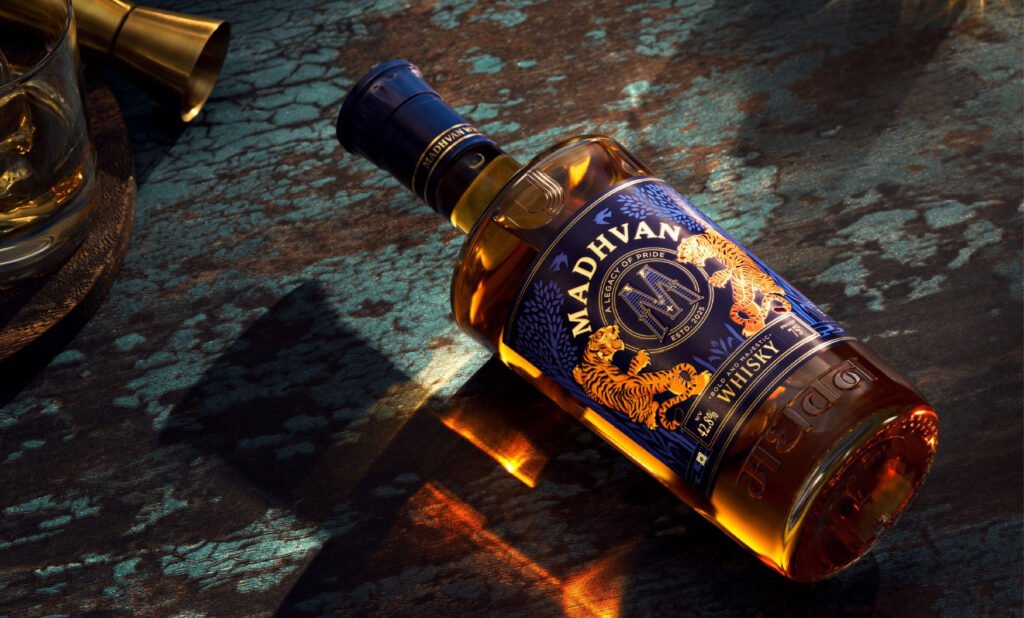
After deliberately giving Soorahi the time to find its footing, we launched Madhvan nearly seven months later to address a distinctly different consumer segment. Madhvan as a brand speaks to a younger, more ambitious audience, who all are driven, optimistic, and forward-looking and sees whisky as a reflection of aspiration and momentum.
This staggered approach was intentional. It allowed us to build credibility with one brand before expanding our portfolio, while also demonstrating early on that UBD is capable of addressing multiple consumer segments without diluting its core philosophy.
You’ve spoken about the Indian consumer looking for products with an ‘Indian accent.’ In whisky terms, what does that actually mean to you, flavour, storytelling, sourcing, or a combination of all three?
An Indian accent is not one element, it is the convergence of flavour, storytelling, and cultural context and much more.
Soorahi draws its strength from Indian symbolism of discovery and hospitality, while Madhvan reflects the aspiration and resilience of a new generation. Together, they express a whisky identity that is rooted, contemporary, and emotionally resonant.
Having led premiumisation strategies across companies like William Grant & Sons, Radico, and ABD, what gaps did you repeatedly notice in the Indian whisky ecosystem that ultimately shaped UBD’s blueprint?
Across my experience with William Grant & Sons, Radico, and ABD, one recurring gap stood out: the Indian whisky category’s overdependence on borrowed Scotch narratives and the absence of premium brands built from an Indian point of view.
What was particularly striking – was that Indian-rooted storytelling and provenance-led narratives had already gained strong traction across several FMCG categories but not in this category. Consumers were clearly responding to brands that felt culturally authentic and locally grounded. Yet, despite alco-bev being a dominant and culturally significant industry, this approach was largely missing in this space for long.
Uppal Brewers and Distillers is addressing this gap by building premium brands rooted in Indian identity, craft, and provenance, while meeting global standards of quality and consistency.

With a ₹100 crore working capital commitment and plans for a dedicated bottling facility, how do you balance aggressive scale with the risk of losing craft credibility, something premium consumers are increasingly sensitive to?
Our investments are designed for disciplined growth, not unchecked scale. Infrastructure, including a dedicated bottling facility, ensures quality and consistency but our prime focus for deploying the working capital initially has been on the market front primarily.
If you observe carefully, every year multiple brands come to the market but only few of them actually become successful over a long period of time and this industry being very capital intensive, can easily burn you out. So aggressive scale is of paramount importance and at UBD, we are therefore carefully opening one market every 3 – 4 months based on various business factors, keeping in mind the premium consumer dynamics.
As on today, Uppal Brewers and Distillers is operating in Delhi, Punjab & Haryana and will soon open Odisha, Daman & Goa markets.
Looking ahead five years, what would success look like for Uppal Brewers and Distillers, not just in volumes or state presence, but in how Indian whisky is perceived both at home and globally? What would you personally like your legacy at UBD to stand for?
Five years from now, success for UBD would mean both national and global recognition for our portfolio of brands, acceptance for our blends, appreciation of our packaging and a healthy balance sheet.
From the perception POV, if Indian-made whiskies are spoken more frequently with the same confidence and respect as leading global brands, I’m sure we’ll know that we’ve done it right.
My legacy, ultimately, is about raising the bar – building brands with patience, integrity, and excellence, and redefining what Indian-made means in fine whisky and in doing so, make UBD a force to reckon with.
What sets Uppal Brewers and Distillers apart is not just its capital strength or its ambitious market plans, but its patience. In an industry often driven by fast launches and faster exits, UBD is choosing to build slowly, deliberately, and with purpose. Ankur Sachdeva’s vision of combining Indian identity with global whisky standards is already taking shape through Soorahi and Madhvan, each speaking to different but equally important consumer mindsets.
If Indian whisky is to earn lasting respect on the world stage, it will be because brands like Uppal Brewers and Distillers dared to define their own voice instead of borrowing one. And if Sachdeva’s philosophy holds true, the future of Indian-made whisky will not just be about what is poured in the glass, but about the story, craft, and confidence behind every sip.