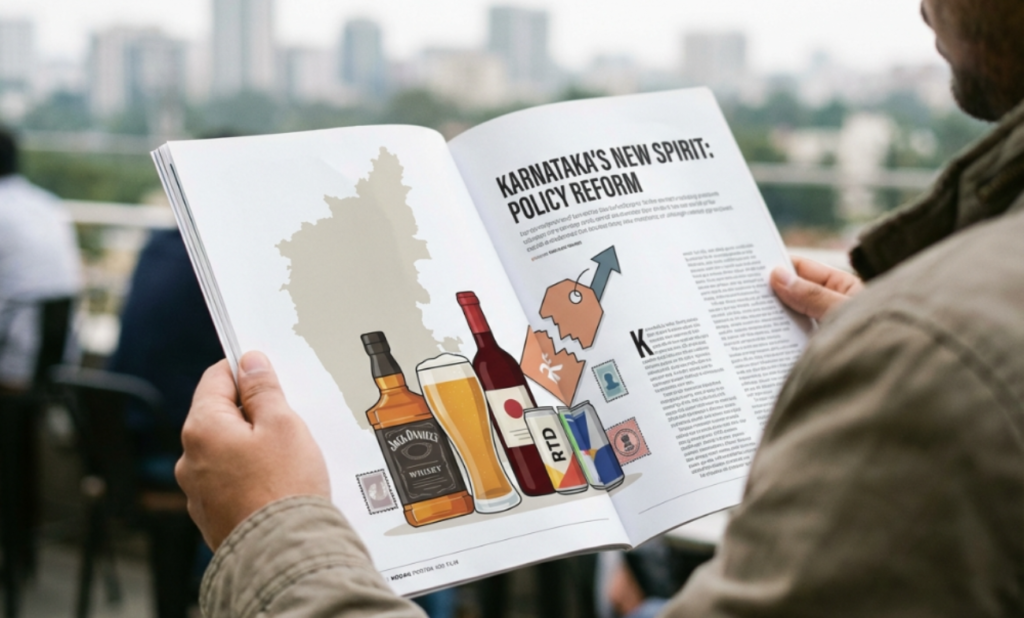
Karnataka is set to implement one of the most significant alcohol policy reforms in India in decades. Beginning April 2026, the state will end government-controlled liquor pricing, introduce an alcohol-in-beverage (AIB) based taxation system, and simplify its pricing structure, fundamentally reshaping how alcoholic beverages are priced and taxed in the state.
Announced as part of the Karnataka Budget 2026–27, the reforms aim to modernise the state’s six-decade-old excise framework while maintaining strong revenue growth from alcohol, one of the state’s largest non-GST income sources.
For India’s alcobev sector, the move signals a shift toward a more market-driven regulatory structure, giving producers greater pricing flexibility while aligning taxation with alcohol strength.
End of Government-Controlled Liquor Pricing
A key pillar of the reform is the removal of state-controlled retail pricing for alcoholic beverages.
Until now, manufacturers were required to submit price proposals to the excise department, which determined the final maximum retail price (MRP) for each product. This system often delayed product launches and limited the ability of companies to adjust prices in response to market demand or cost changes.
Under the new policy, manufacturers and brand owners will be allowed to determine their own retail prices, enabling a more competitive pricing environment across spirits, beer, and wine categories. The government will instead focus on regulating taxation and compliance rather than fixing market prices.
Introduction of Alcohol-in-Beverage (AIB) Based Excise Duty
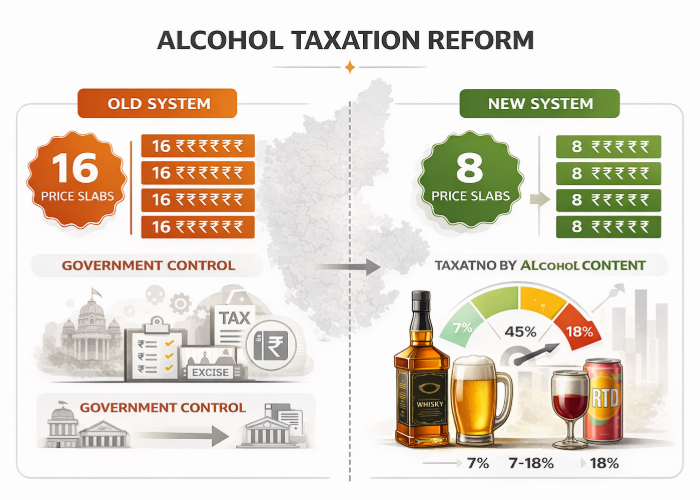
Alongside pricing deregulation, Karnataka will introduce an alcohol-in-beverage (AIB) based excise duty system, a model that taxes alcoholic drinks based on their alcohol content (ABV) rather than only by category.
This approach aligns Karnataka with international taxation practices where the tax burden corresponds to the amount of pure alcohol present in the beverage.
Under the AIB framework:
- Higher-alcohol beverages will attract proportionally higher excise duties
- Lower-alcohol drinks such as beer, wine, and ready-to-drink beverages could see relatively lower tax incidence
- The taxation structure becomes more transparent and easier to administer
The reform is expected to influence product innovation, potentially encouraging the development of lower-alcohol formats and new beverage categories in the Indian market.
Simplification of Pricing Categories
Another major structural change is the reduction of pricing slabs from 16 categories to eight.
The earlier multi-tier system often created administrative complexity for both producers and regulators. By simplifying the structure, the government aims to streamline product approvals and make compliance easier for alcohol companies operating in the state.
The transition to the new system is expected to occur over a phased period of three to four years, allowing the industry time to adjust pricing strategies and supply chains.
Technology-Driven Compliance and Supply Chain Monitoring
The new policy also incorporates technology-driven reforms aimed at improving transparency and curbing illicit trade.
Among the proposed measures:
- Blockchain-based tracking systems for alcohol supply chains
- Geo-fenced electronic locks (e-locks) for transport monitoring
- Replacement of manual escort systems with digital tracking tools
These initiatives are designed to strengthen compliance while reducing administrative bottlenecks in the movement of alcohol across the state.
Licensing and Operational Reforms
The Karnataka government is also introducing several changes aimed at easing regulatory processes for the industry.
Key operational reforms include:
- Automatic renewal of certain licenses
- Self-declaration for label approvals to speed up product launches
- Permissions for 24-hour brewery operations
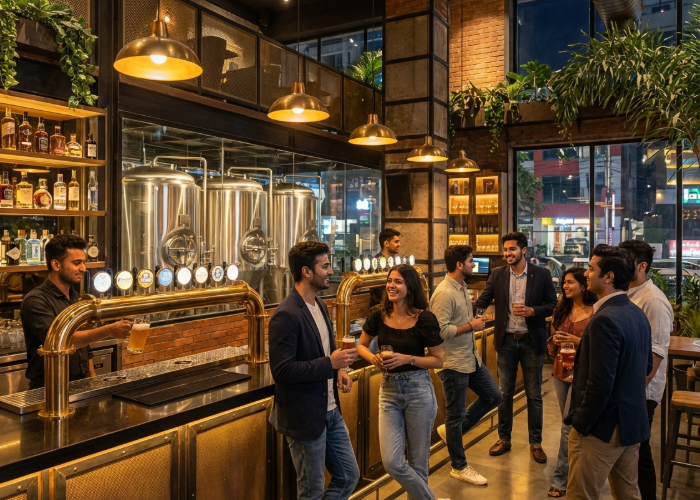
- Allowing on-site tastings and direct sales, which could support alcobev tourism and brewery-led experiences.
These measures are expected to benefit breweries, craft distillers, and hospitality operators, particularly in Bengaluru, which has emerged as one of India’s most vibrant beer and nightlife hubs.
Revenue Importance for Karnataka
Alcohol remains one of the most important sources of revenue for the Karnataka government.
Excise collections from liquor reached ₹36,492 crore by February 2026, marking a 12.7% year-on-year increase, with the state targeting approximately ₹45,000 crore in revenue for FY2026–27.
By shifting toward ABV-based taxation and deregulated pricing, the government aims to maintain strong revenue flows while improving compliance and reducing regulatory friction.
Karnataka is also one of India’s most significant alcohol markets, accounting for roughly 15% of the country’s IMFL consumption, making policy changes in the state particularly important for the broader industry.
Positive Industry and Market Response
The alcobev industry has largely welcomed the reforms.
Brewers, distillers, and hospitality stakeholders have described the policy as progressive, highlighting the benefits of pricing flexibility, simplified compliance, and faster product launches.
Financial markets also reacted positively. Following the announcement, shares of several alcohol companies saw notable gains, including:
- Radico Khaitan
- United Breweries
- Tilaknagar Industries
- Allied Blenders & Distillers
- United Spirits
Investors expect the reforms to support volume growth, premiumisation, and margin improvements across the sector.
What It Means for the Indian Alcobev Market
Karnataka’s liquor policy overhaul represents more than a state-level regulatory update—it signals a broader evolution in how alcohol markets could be governed in India.
By combining pricing deregulation, ABV-based taxation, simplified licensing, and technology-driven enforcement, the state is moving toward a more modern and efficient excise system.
If successfully implemented, the reform could strengthen Karnataka’s position as one of India’s most dynamic alcobev markets while potentially serving as a policy template for other states exploring excise reforms.
For producers, distributors, and hospitality players, the changes promise a more competitive environment—one that could accelerate innovation, premiumisation, and growth across India’s rapidly evolving beverage alcohol industry.